
Why Anxiety Feels Worse at Night (And You’re Not Alone)
Why Anxiety Feels Worse at Night
If you’ve ever wondered why anxiety feels worse at night, you’re not alone—and you’re not imagining it.
Many people notice that during the day, they can keep going. There are distractions, responsibilities, and interactions that help keep anxiety in the background.
But at night, something shifts.
The house gets quieter.
Your body starts to slow down.
And suddenly, your thoughts feel louder than they did all day.
You might find yourself replaying conversations, worrying about tomorrow, or feeling a sense of unease that’s hard to explain.
And in those moments, it can feel isolating—like you’re the only one experiencing it.
But this is actually a very common experience.
When the Day Ends, Anxiety Gets Loude
During the day, your mind is often occupied.
You’re moving from one thing to the next, solving problems, responding to people, and staying engaged. Even if anxiety is present, it doesn’t always have space to fully surface.
At night, that changes.
There’s less noise.
Less distraction.
Less external focus.
And your mind finally has space to process what it’s been holding all day.
That’s one of the biggest reasons why anxiety feels worse at night—because it’s often the first quiet moment your mind has had all day.
The Science Behind Why Anxiety Feels Worse at Night
There’s also a biological reason for this pattern.
Your body follows a natural rhythm throughout the day, often referred to as your circadian rhythm. As evening approaches, your body begins to wind down physically—but your mind doesn’t always follow at the same pace.
According to the National Institute of Mental Health, anxiety is closely connected to both cognitive and physiological processes. When your body is tired, your ability to regulate thoughts and emotions can be reduced.
This means:
- you may feel more emotionally sensitive
- your thoughts may feel more intense
- it may be harder to “talk yourself out” of worry
So if your anxiety feels stronger at night, it’s not a lack of control—it’s your system being more vulnerable when it’s fatigued.
Why Your Mind Doesn’t “Turn Off” at Night
One of the most frustrating parts of nighttime anxiety is feeling like your mind won’t stop.
You might lie in bed thinking:
- “Why can’t I just relax?”
- “Why is this happening now?”
- “I just want to sleep.”
But the truth is, your mind isn’t trying to make things harder—it’s trying to process.
During the day, there often isn’t enough time or space to fully feel or think through everything that’s happening internally.
At night, when things slow down, your brain tries to catch up.
That’s another reason why anxiety feels worse at night—because your mind is finally getting a chance to sort through what’s been building.
You’re Not Alone in This Experience
It’s important to pause here and say this clearly:
👉 This is a shared human experience.
Many people struggle with anxiety more intensely at night. It doesn’t mean something is wrong with you. It doesn’t mean you’re not coping well enough.
It means your mind and body are trying to process and protect you in the only way they know how.
When you understand this, something shifts.
Instead of fighting your experience, you can begin to respond to it with more compassion.
Creating Safety When Anxiety Feels Worse at Nigh
If you’re trying to figure out what to do when anxiety rises at night, the goal isn’t to force your thoughts to stop.
The goal is to create a sense of safety—both in your environment and in your body.
That might look like:
- dimming lights and reducing stimulation
- stepping away from screens before bed
- creating a consistent nighttime routine
Even small changes can signal to your nervous system that it’s okay to begin settling.
Supporting Your Body, Not Just Your Thoughts
When anxiety is high, it can be tempting to stay in your thoughts and try to “figure it out.”
But often, your body needs support first.
Simple grounding strategies can help:
- slowing your breathing
- placing a hand on your chest or stomach
- noticing physical sensations around you
These aren’t complicated—but they help shift your body out of a heightened state.
The Calming Power of Connection
Another important piece of nighttime support is connection.
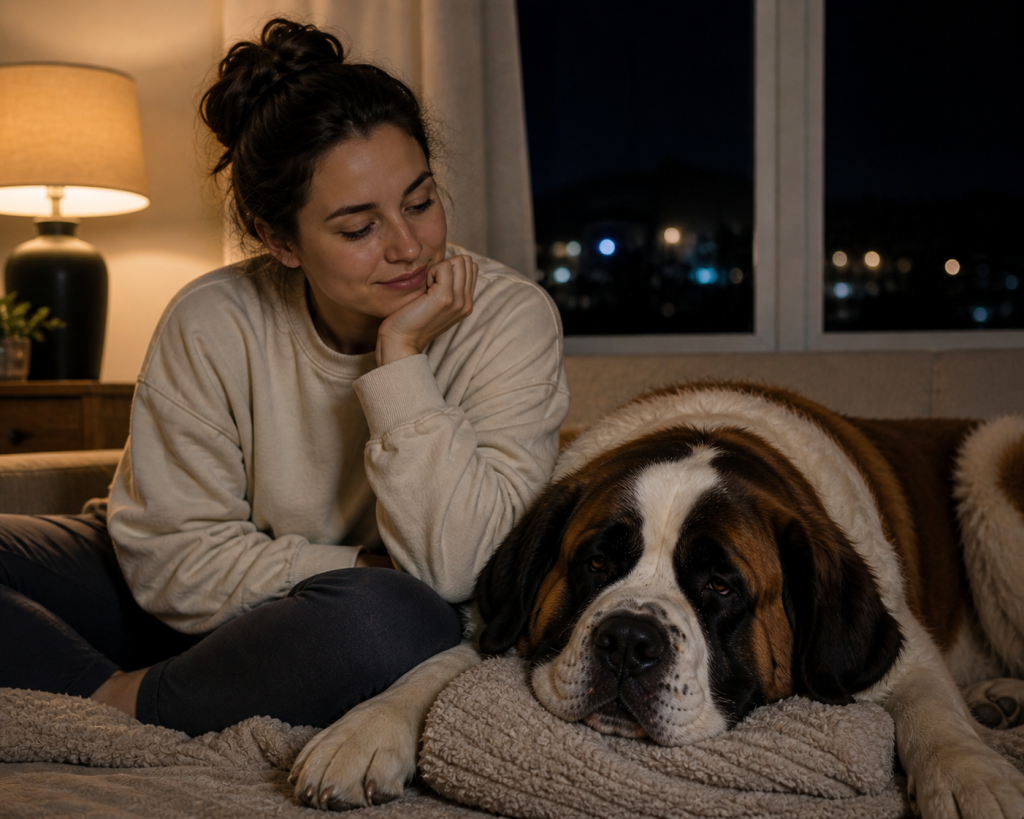
Even if you’re not talking to someone, being near a calm, steady presence can help your nervous system regulate.
At Animal Assisted Counseling of Indiana, many individuals find that the presence of a therapy dog creates a sense of calm that feels natural and immediate.
Sitting beside a dog, feeling their steady breathing, or simply not feeling alone in the space can make a meaningful difference.
This is one of the reasons animal-assisted therapy can be so effective—especially for anxiety.
When It Might Be Time for Extra Support
If anxiety at night is happening consistently, affecting your sleep, or feeling overwhelming, it may be helpful to have additional support.
Therapy provides a space to:
- understand patterns
- learn coping strategies
- feel supported without pressure
The American Psychological Association highlights that supportive interventions can help reduce the intensity and frequency of anxiety symptoms over time.
You Deserve Rest and Support
If you’ve been struggling with why anxiety feels worse at night, it’s not because you’re doing something wrong.
It’s because your mind and body are trying to process, protect, and make sense of your experience.
And you don’t have to do that alone.