
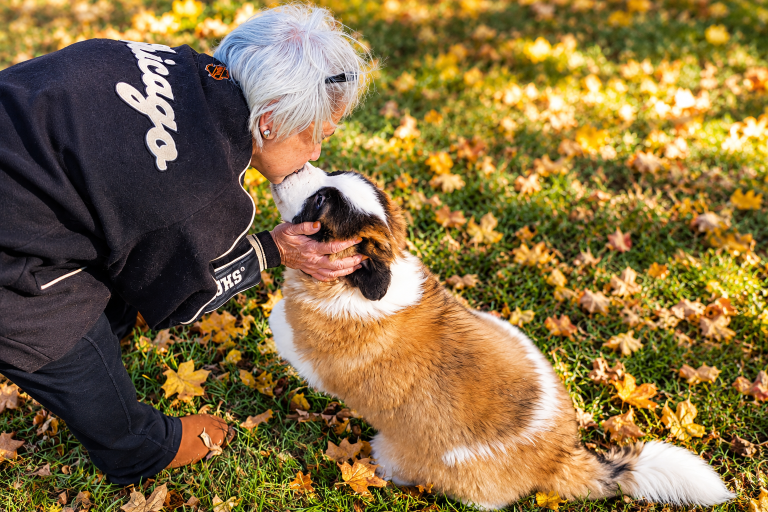
The Human-Animal Bond: How Our Connection With Animals Can Support Mental Health
Have you ever noticed how an animal can become such an important part of your everyday life?
Maybe it’s your dog greeting you at the door after a long day.
Your cat curling up beside you while you’re reading.
The familiar sound of paws following you from one room to another.
Or simply looking over and seeing your animal resting peacefully nearby.
Nothing extraordinary has to happen.
You don’t have to have a conversation. You don’t have to explain how you’re feeling. Sometimes you’re simply sharing a moment together.
And somehow, that moment matters.
I’ve been thinking a lot about connection lately—how we experience it with ourselves, with other people, with nature, and with the animals who become part of our lives.
One of the things I find so meaningful about our relationships with animals is how much connection can happen without words.
There’s actually a name for this relationship: the human-animal bond.
And while many of us recognize how important our animals are to us, there’s also a growing body of research exploring how these relationships may influence our emotional well-being.
So let’s talk about what the human-animal bond really means, why it can feel so powerful, and how this connection can become part of a professional counseling experience.
What Is the Human-Animal Bond?
The human-animal bond refers to the meaningful relationships that develop between people and animals through shared experiences, interactions, companionship, and care.
The American Veterinary Medical Association (AVMA) describes the human-animal bond as a mutually beneficial and dynamic relationship between people and animals that is influenced by behaviors essential to the health and well-being of both.
I especially appreciate the emphasis on both.
Because connection isn’t simply about what an animal gives us.
It’s also about the relationship we develop, the care we provide, the ways we communicate, and our responsibility for the animal’s well-being.
For some people, that relationship develops with a dog or cat. For others, it may involve horses, birds, rabbits, or other animals.
And you don’t necessarily have to own an animal to experience a meaningful connection.
People may develop connections through caring for animals, volunteering, spending time around animals, observing wildlife, or participating in appropriately structured animal-assisted activities.
What makes the relationship meaningful is personal.
And that is something worth remembering.
Why Does the Human-Animal Bond Feel So Meaningful?
Think about the relationships in your own life.
Some connections are built through conversations.
Others develop through shared experiences, familiarity, trust, and simply spending time together.
Our relationships with animals can involve many of those same elements.
A dog may learn your daily routine and wait near the door when it’s time for a walk.
A cat may have a favorite place to sit beside you.
An animal may respond to familiar voices, movements, or activities.
Over time, these small interactions become part of the rhythm of everyday life.
And those routines can carry emotional meaning.
Maybe walking your dog is one of the few times during the day when you step away from responsibilities.
Maybe sitting beside your cat gives you a quiet moment after a stressful afternoon.
Or perhaps caring for an animal gives your day a sense of structure and purpose.
The human-animal bond isn’t necessarily built through extraordinary experiences. Sometimes it develops through hundreds of ordinary moments that gradually become important to us.
I think that’s one of the most beautiful things about connection.
We don’t always recognize its significance while it’s happening.
Sometimes we’re simply living it.
The Human-Animal Bond and Mental Health: What Does Research Tell Us?
When we talk about pets and mental health, it’s tempting to say that animals make everyone happier or that having a pet automatically reduces anxiety.
But relationships—and mental health—are more complicated than that.
Research has explored connections between human-animal interaction and emotional well-being, including stress, mood, companionship, social connection, and quality of life.
The Human Animal Bond Research Institute (HABRI) provides information about research examining relationships between people and animals.
The National Institutes of Health also discusses how interactions with animals may affect human health and well-being while recognizing that the research is still developing.
Some findings are encouraging, but the benefits aren’t universal. The experience depends on the person, the animal, the relationship, and the circumstances.
Still, there are several ways the human-animal bond may contribute to emotional wellness.
Emotional Comfort and Companionship
For many people, animals become familiar companions during both ordinary and difficult times.
An animal may be present during major life transitions, periods of stress, changes in relationships, or moments when someone feels lonely.
That companionship can be meaningful.
Sometimes what we appreciate most isn’t that an animal changes how we’re feeling.
It’s simply that we’re not experiencing the moment entirely alone.
Stress and Present-Moment Awareness
Have you ever been so caught up in your thoughts that you barely noticed what was happening around you?
Maybe you’re thinking about tomorrow’s responsibilities, replaying a conversation, or worrying about something you can’t control.
Then your dog nudges your hand.
Or your cat stretches across the couch.
And for a moment, your attention shifts.
You notice the warmth of their fur, the movement of their breathing, or the way they’re looking at you.
Interactions like these may create opportunities to slow down and become more aware of the present moment.
That doesn’t mean animals eliminate stress.
But sometimes they offer another way to reconnect with what’s happening right now.
Routine, Purpose, and Social Connection
Caring for an animal often involves daily routines.
Feeding, walking, grooming, playing, and spending time together can create structure.
For some people, those activities also encourage movement, time outdoors, or interactions with others.
Think about the conversations that begin because someone stops to admire a dog during a walk.
Or the connections people develop through volunteering with animals.
Our relationships with animals can sometimes become bridges to other relationships, too.
Animals Can Help Us Notice the Present Moment
One of the ideas I’ve been exploring through my Living Connection work is how connection begins with awareness.
We spend so much of our time thinking about what happened yesterday or what needs to happen tomorrow.
Sometimes we move through the day without noticing much of what’s around us.
Animals can invite us to pay attention differently.
A dog stops to investigate an interesting scent.
A bird lands outside the window.
A cat watches sunlight move across the floor.
A horse responds to subtle changes in movement or attention.
These moments can remind us to notice.
Not because we need to turn every interaction into a mindfulness exercise.
But because being present is one way we experience connection.
This relates closely to our earlier reflection on connecting with nature.
Sometimes we don’t need another activity to accomplish.
Sometimes we simply need an opportunity to notice what’s already here.
And that brings me back to a question I’ve been asking lately:
What did you notice today?
Maybe it was something small.
Maybe it was a moment with an animal.
Maybe it was a few minutes when you felt connected to the world around you.
Those moments count.
The Human-Animal Bond Also Includes Grief and Loss
There’s another side of the human-animal bond that deserves just as much compassion.
When a relationship becomes deeply meaningful, the possibility of losing it can be incredibly painful.
Our animals may become part of our daily routines, our homes, our memories, and our sense of companionship.
They may be with us through significant chapters of our lives.
And when an animal becomes ill, grows older, or dies, the emotional impact can be profound.
Sometimes the grief begins before the loss itself.
You may notice changes in your animal’s health or abilities and begin worrying about what lies ahead.
This experience is sometimes called anticipatory grief.
You can feel grateful for the time you have together while also feeling sadness, fear, or uncertainty about the future.
Those feelings can exist at the same time.
And when an animal dies, the loss may affect far more than the absence of a beloved companion.
It may change your routines, your home environment, and the small moments that once felt so familiar.
If you’re navigating this kind of loss, our Pet Grief Counseling resources offer a place to begin exploring support.
Grieving an animal isn’t an overreaction to losing “just a pet.” It can be a reflection of the significance of the relationship you shared.
What Is Animal-Assisted Therapy?
So how does the human-animal bond connect to mental health counseling?
This is where it’s important to distinguish everyday relationships with animals from professional animal-assisted therapy.
Spending time with a beloved pet can be meaningful.
But animal-assisted counseling involves more than simply having an animal present.
In animal-assisted therapy, an appropriately prepared animal may be intentionally incorporated into the work of a qualified mental health professional.
The animal’s involvement should be appropriate to the person’s needs, preferences, therapeutic goals, and circumstances.
Safety and animal welfare matter, too.
The animal doesn’t replace the counselor.
And the animal doesn’t replace the therapeutic relationship between the counselor and the person seeking support.
Instead, the human-animal connection may offer another meaningful way to explore emotions, relationships, communication, awareness, and personal experiences.
You can learn more about our approach on the Animal-Assisted Therapy page.
How the Human-Animal Bond Fits Into Client-Centered Counseling
At Animal Assisted Counseling of Indiana, our work is grounded in a client-centered approach.
That means counseling begins with you.
Your experiences.
Your feelings.
Your needs.
Your goals.
And your pace.
I believe meaningful change develops within a supportive therapeutic relationship where people have opportunities to explore their experiences without feeling pressured to become someone they’re not.
When animal-assisted counseling is appropriate, the presence of an animal may provide another avenue for that exploration.
For example, someone might notice how they experience comfort, closeness, uncertainty, trust, or connection during an interaction with an animal.
Another person might find that the animal’s presence helps them become more aware of their surroundings or creates a natural opening for conversation.
And someone else may prefer traditional counseling without an animal present.
All of those experiences are valid.
Animal-assisted therapy isn’t right for everyone, and it shouldn’t have to be.
Personal preferences, allergies, fears, cultural experiences, accessibility, and the animal’s needs all deserve consideration.
The focus remains on creating a counseling experience that respects the individual.
Meet Sadie: What the Human-Animal Bond Has Taught Me
My relationship with Sadie, my St. Bernard, has shaped the way I think about connection—both personally and professionally.
Over the years, I’ve become increasingly aware of how much can be communicated without words.
Sometimes it’s a look.
A movement.
The way an animal responds to your presence.
Or simply the familiarity of being together.
Our relationship has taught me about patience, attention, trust, responsibility, and the importance of noticing the small moments that make a connection meaningful.
Sadie has been an important part of my life and my work, and my experiences with her continue to influence how I understand the relationships we develop with animals.
I think one of the things animals can teach us is that connection doesn’t always require us to explain ourselves.
Sometimes it begins with being present.
And sometimes that’s enough.