
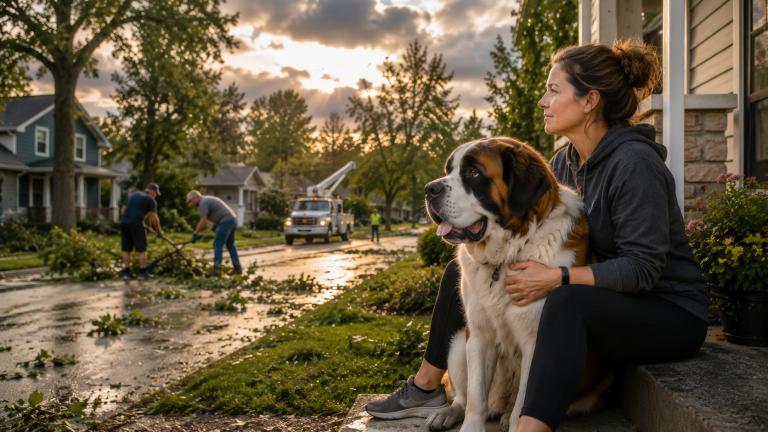
Disaster Mental Health: Coping With Stress and Loss After a Storm
Our community has been through a lot.
When severe weather moves through Munster and surrounding Northwest Indiana communities, the effects can continue long after the wind and rain have stopped.
There may be trees to remove, damage to repair, food to replace after a power outage, insurance companies to call, and an endless list of things that suddenly need attention. Eventually, electricity returns. Roads reopen. Debris gets picked up. From the outside, life may start looking “normal” again.
But you may not feel normal yet.
Maybe you’re checking the weather more often than you used to. Maybe thunder suddenly makes you tense. Perhaps you’re having trouble sleeping, feeling unusually irritable, or finding yourself thinking, What if it happens again?
That’s where disaster mental health becomes an important part of recovery.
The cleanup after a storm is visible. The emotional impact often isn’t.
And if you’re still feeling unsettled after everyone else seems to have moved on, I want you to know that emotional recovery doesn’t have to happen on the same timetable as physical recovery.
What Is Disaster Mental Health?
Disaster mental health refers to the emotional and psychological effects people may experience during and after natural disasters, severe weather, emergencies, and other highly disruptive events.
It doesn’t mean everyone who experiences a frightening storm will develop a mental health condition.
In fact, feeling stressed after something frightening or unpredictable can be a very human response.
The Centers for Disease Control and Prevention’s guidance on coping after a disaster encourages people to pay attention to their emotional health as well as their physical needs after a disaster. Stress reactions may affect emotions, concentration, sleep, behavior, and the body.
You might notice that you’re more anxious than usual. You may feel exhausted even though you’re finally getting enough sleep. You might have difficulty concentrating, become irritated more easily, or feel overwhelmed by decisions that ordinarily wouldn’t bother you.
Some people repeatedly check weather alerts. Others become anxious when another storm is forecast or find that strong winds and thunder suddenly feel different than they did before.
None of those reactions automatically means something is “wrong.”
Your mind and body may simply still be processing an experience that temporarily changed your sense of safety.
Common Emotional Reactions and Disaster Mental Health
People respond differently to natural disasters.
One person may feel relieved and ready to move forward immediately. Someone else may remain anxious for weeks. Another person may feel fine initially and notice emotional reactions later.
The CDC notes that stress responses following traumatic incidents can be physical, cognitive, emotional, or behavioral and may include anxiety, grief, fear, irritability, difficulty concentrating, nightmares, exhaustion, or feeling overwhelmed.
After severe weather, you might notice:
- Feeling unusually alert or “on edge”
- Trouble falling or staying asleep
- Difficulty concentrating
- Irritability or impatience
- Physical or emotional exhaustion
- Feeling overwhelmed by repairs or cleanup
- Repeatedly checking weather apps or alerts
- Anxiety when another storm is predicted
- Feeling startled by thunder or strong winds
- Sadness about damaged property or possessions
- Feeling uncomfortable or less secure in your own home
- Difficulty getting back into normal routines
Sometimes simply understanding that these can be stress reactions after a natural disaster makes them feel a little less frightening.
Grief and Loss After a Storm
Throughout this week, we’ve talked about grief in several different forms.
And this is an important reminder:
Grief isn’t limited to death.
After a natural disaster, people may grieve things that others don’t immediately recognize as losses.
Maybe a tree that stood in your yard for decades was destroyed.
Perhaps photographs, furniture, family keepsakes, or other sentimental belongings were damaged.
Maybe you’re dealing with unexpected repair costs and grieving the financial security you had before the storm.
You may even be grieving your routines.
And sometimes the biggest loss isn’t something you can physically see at all.
It may be your sense of safety.
Before the storm, home may have represented the place where you could shut the door and feel protected from the outside world.
Then something happened that reminded you how quickly life can change.
That realization can be deeply unsettling.
Grief after a natural disaster doesn’t need to look like traditional bereavement to deserve compassion.
You can be grateful that you’re safe and still be upset about what happened.
You can know that other people experienced greater losses and still acknowledge your own.
Someone else’s suffering doesn’t invalidate yours.
When the Power Comes Back but You Don't Feel Back to Normal
There’s something strange about the moment life begins returning to normal after a disaster.
The lights come back on.
The refrigerator starts humming again.
The chainsaws eventually stop.
You return to work.
The kids go back to their routines.
Everyone starts talking about something else.
And yet part of you may still feel like you’re waiting for the next warning.
That’s because restoring electricity and restoring a sense of safety aren’t necessarily the same thing.
Your nervous system doesn’t operate according to the power company’s restoration schedule.
After a frightening experience, your body may remain more alert for signs of danger.
A rumble of thunder may suddenly grab your attention.
You may check the radar before bed.
You may find yourself watching the trees when the wind picks up.
Emotional recovery can take longer than physical cleanup, and that’s okay.
The CDC notes that “getting back to normal” can take time and recommends gradually returning to routines while allowing yourself space to recover.
Coping After a Natural Disaster: Rebuilding a Sense of Safety
If you’re wondering how to begin feeling settled again, start small.
Start with what you can control.
After an experience that made life feel unpredictable, predictable routines can be surprisingly reassuring.
Return to familiar meal and sleep schedules when possible. Take breaks from cleanup and repairs. Spend time with people who help you feel grounded. Accept practical help when someone offers it.
If you’re consuming constant storm footage, neighborhood posts, weather predictions, and videos of damage, consider giving yourself permission to step away.
Being informed is helpful.
Being immersed in frightening information for hours at a time usually isn’t.
The CDC recommends reconnecting with supportive people, gradually returning to routines, getting adequate rest and exercise, and making manageable daily decisions that can restore a feeling of control.
If you’re feeling overwhelmed and want additional tools for managing stress, anxiety, grief, and emotional wellness, you can also explore the AACI Mental Health Resource Center for supportive information you can return to whenever you need it.
Recovery doesn’t require doing everything perfectly.
Sometimes recovery looks like eating dinner at your normal time.
Taking the dog for a walk.
Sitting outside for ten quiet minutes.
Calling someone you trust.
Going to bed instead of checking the radar one more time.
Small moments of normalcy can remind your mind and body:
Right now, in this moment, I am okay.
Helping Children and Teens Feel Safe After Severe Weather
Adults aren’t the only ones affected by severe weather.
Children and teenagers may experience storm anxiety without saying, “I’m anxious because of what happened.”
Instead, parents may notice sleep difficulties, irritability, physical complaints, increased reassurance seeking, difficulty concentrating, reluctance to be alone, or repeatedly checking the weather.
Some young people may become especially nervous whenever another storm is predicted.
SAMHSA notes that children and teens often need time and emotional support to feel secure after traumatic events and that caregivers can play an important role by providing comfort and maintaining or reestablishing routines.
Try not to dismiss fears with:
“There’s nothing to worry about.”
Instead, you might say:
“I understand why the storm scared you. It scared a lot of people. We’re safe right now, and we’ll keep paying attention to the weather together.”
You don’t have to promise that another storm will never happen.
You can offer something much more realistic and reassuring:
We’re here. We’re prepared. And we’ll handle things together.
When Storm Anxiety Doesn't Go Away
For many people, emotional reactions after severe weather gradually become less intense.
Sleep improves.
Weather alerts stop feeling quite so threatening.
Normal routines return.
But sometimes post disaster stress lingers.
If weeks have passed and you’re still experiencing significant anxiety, nightmares, intrusive memories, avoidance, difficulty sleeping, persistent fear, or distress that’s interfering with work, school, relationships, or everyday activities, additional support may be helpful.
Seeking counseling doesn’t mean you’re overreacting.
It means you’re paying attention to what your mind and body are telling you.
CDC guidance similarly recommends seeking professional support when distress persists or begins interfering with daily activities.
Finding Disaster Mental Health Support in Munster and Northwest Indiana
One of the most important things about disaster mental health is remembering that recovery doesn’t have to happen alone.
Communities recover together.
Neighbors check on neighbors.
Families help one another.
Friends listen.
And sometimes professional support becomes another part of that recovery.
For members of our Munster and Northwest Indiana community who find that the emotional effects of severe weather are lingering, counseling can provide a place to process what happened, understand anxiety and stress responses, and gradually rebuild a sense of safety.
At Animal Assisted Counseling of Indiana, we provide client-centered counseling for adults, teens, couples, and families experiencing anxiety, depression, grief, trauma, stress, and relationship difficulties.
You can also visit our Mental Health Resource Center for educational information and practical emotional-wellness resources.
And if what you’re experiencing continues to feel difficult to manage on your own, you can contact Animal Assisted Counseling of Indiana to learn more about counseling or request an appointment.
The storm may be over.
The power may be back.
The debris may eventually disappear.
But if part of you is still recovering, give yourself some time.
The things we carry after a storm aren’t always visible—and they deserve care too. 💚🐾