
How to Calm Anxiety at Night and Finally Rest
How to Calm Anxiety at Night Naturally When Night Feels the Hardest
.
If you’ve been searching how to calm anxiety at night naturally, you’re likely familiar with how difficult nighttime can feel.
During the day, you can often keep going. There are distractions, responsibilities, and moments that help you stay focused.
But at night, everything slows down.
The quiet sets in.
Your body is tired.
And your mind… keeps going.
You might find yourself:
- replaying conversations
- worrying about tomorrow
- feeling restless or unable to relax
And instead of drifting into sleep, you feel more awake than ever.
If this sounds familiar, you’re not alone—and there are ways to support yourself through it.
Why Anxiety Feels Stronger at Night
Understanding how to calm anxiety at night naturally starts with understanding why it happens in the first place.
At night:
- there are fewer distractions
- your mind has space to process
- your body is more fatigued
This combination makes thoughts feel louder and emotions feel more intense.
According to the National Institute of Mental Health, anxiety can increase when the brain has fewer external inputs and more internal focus.
So if anxiety feels stronger at night, it doesn’t mean something is wrong with you.
👉 It means your mind is trying to process what it didn’t have time for during the day.
How to Calm Anxiety at Night Naturally by Supporting Your Body
When anxiety rises at night, it’s tempting to try to “think your way out of it.”
But calming anxiety often starts with your body—not your thoughts.
If you’re working on how to calm anxiety at night naturally, begin with small, physical supports:
Slow, steady breathing
Try breathing in for four seconds and out for six.
This helps regulate your nervous system and signals safety.
Gentle grounding
Notice where you are:
your bed
your blanket
the feeling of your body resting
Reducing stimulation
Lower lights, step away from screens, and create a calmer environment.
These small changes help your body shift out of a heightened state.
Creating a Calming Nighttime Routine
One of the most effective ways to calm anxiety at night is to create consistency.
A simple nighttime routine can help your body recognize when it’s time to slow down.
This doesn’t have to be complicated.
It might include:
- dimming lights in the evening
- limiting phone or screen use
- sitting quietly before bed
- practicing slow breathing
These small, repeated actions help build a sense of predictability and calm.
The Power of Feeling Safe at Night
One of the most important parts of learning how to calm anxiety at night naturally is creating a sense of safety.
Anxiety often increases when your system feels uncertain or ungrounded.
That’s why calming environments—and calming presence—can make such a difference.
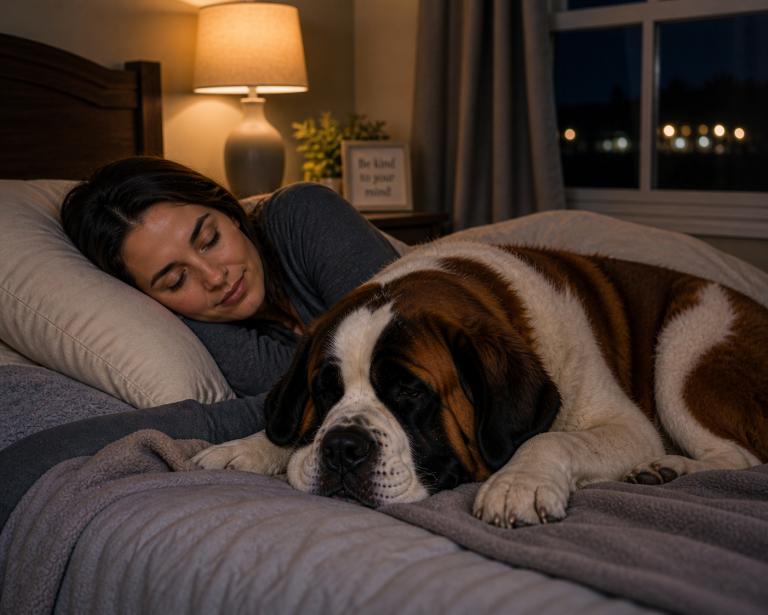
At Animal Assisted Counseling of Indiana, many individuals notice that being near a therapy dog helps reduce anxiety, especially in quieter moments.
The steady, nonjudgmental presence of an animal can:
- help regulate breathing
- reduce tension
- create a sense of comfort
Sometimes, calm doesn’t come from doing more—it comes from feeling supported.
What to Do When Your Mind Won’t Slow Down
If your thoughts are racing at night, trying to force them to stop often makes them louder.
Instead, try shifting your approach.
Rather than:
👉 “I need to stop thinking”
Try:
👉 “I can let these thoughts pass without engaging them”
You might:
- gently return your focus to your breath
- notice thoughts without reacting
- remind yourself that you don’t need to solve everything right now
This shift reduces pressure and helps your mind gradually settle.
When Nighttime Anxiety Becomes Ongoing
If you’re consistently struggling with nighttime anxiety, it may be helpful to have additional support.
Learning how to calm anxiety at night naturally is powerful—but you don’t have to figure it out alone.
Therapy can help you:
- understand patterns behind your anxiety
- develop personalized coping strategies
- feel supported in a safe, calming space
The American Psychological Association highlights that consistent support can help reduce anxiety over time and improve overall well-being.
💛 You Don’t Have to Face the Night Alone
If anxiety shows up when everything else quiets down, it can feel isolating.
But this experience is more common than you might think.
And more importantly—
👉 It’s something you can learn to move through with support.
💛 Rest Is Possible
If you’ve been searching for how to calm anxiety at night naturally, it’s likely because you want something to feel different.
And it can.
Not all at once—but gradually, gently, and in ways that feel manageable.
🔗 Helpful Links
👉 Read Wednesday’s blog:
https://animalassistedcounseling.net/blog/anxiety-worse-at-night
👉 Learn more about support:
https://animalassistedcounseling.net
Continue Learning About Anxiety
Looking for more information?
Visit our comprehensive Anxiety Resource Center to learn about:
Signs and symptoms of anxiety
Types of anxiety disorders
Healthy coping strategies
Frequently asked questions
When to seek professional help
Animal-assisted therapy for anxiety